To interact with the Zivio API, you first need to create an API key within your Zivio platform. You can find out how to do this is in the following section.
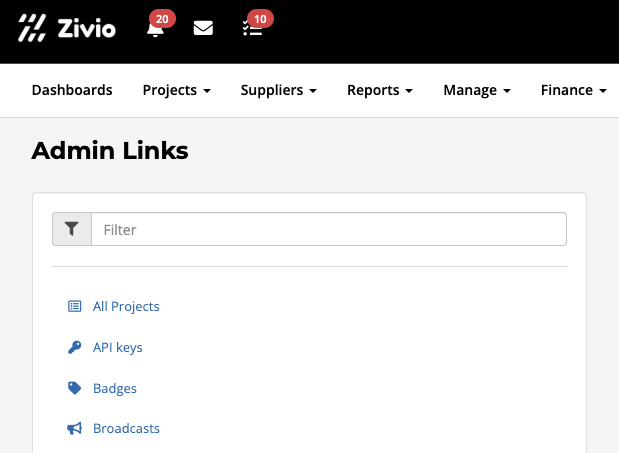
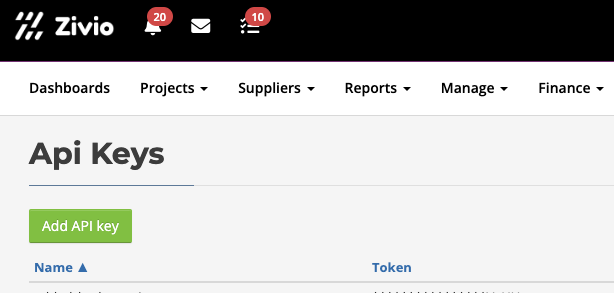
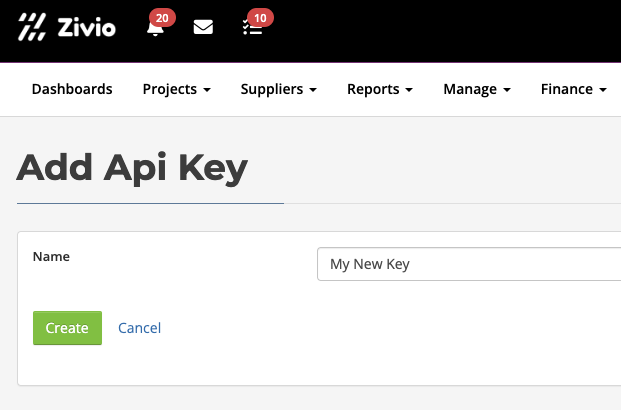
First, navigate to the ‘Admin’ tab in your navigation menu, and click on ‘Admin Dashboard’. There you will see a list of options, as in the image below:Click ‘API Keys’, which will take you to the below screen:Click ‘Add API Key’, and you will be presented with the screen below. Type a name that will help you identify your API Key, and click the ‘Create’ button.You will be redirected back to the ‘API Keys’ page when your new key has been successfully created. Note the flash message that appears:Please note down the token value, as you will need it when making requests in the next section.
There are two ways to reach the v3 API.The regional API endpoints — these are the URLs listed in the API Reference and used by its playground:
Region
Base URL
Global
https://api.zivio.net/api/v3
EU
https://api.eu.zivio.net/api/v3
UK
https://api.uk.zivio.net/api/v3
US
https://api.us.zivio.net/api/v3
These endpoints serve every Zivio organisation, so each request must also identify yours with the zivio-tenant-id header. Ask your Zivio administrator for your organisation identifier.
A request to a regional endpoint without a valid zivio-tenant-id returns 404 Tenant Unknown. This is checked before authentication, so it is not a problem with your API key.
Your own Zivio domain — if you send requests to your organisation’s own Zivio URL instead, the organisation is already identified by the hostname and the zivio-tenant-id header is not required.